
Anant Agarwal is the chief platform officer of 2U, and founder of edX. Anant taught the first edX course on circuits and electronics from MIT, which drew 155,000 students from 162 countries. He has served as the director of CSAIL, MIT's Computer Science and Artificial Intelligence Laboratory, and is a professor of electrical engineering and computer science at MIT. He is a successful serial entrepreneur, having co-founded several companies including Tilera Corporation, which created the Tile multicore processor, and Virtual Machine Works.
Anant won the Maurice Wilkes prize for computer architecture, and MIT's Smullin and Jamieson prizes for teaching. He is also the 2016 recipient of the Harold W. McGraw, Jr. Prize for Higher Education, which recognized his work in advancing the MOOC movement. Additionally, he is a recipient of the Padma Shri award from the President of India and was named the Yidan Prize for Education Development Laureate in 2018. He held a Guinness World Record for the largest microphone array, and is an author of the textbook "Foundations of Analog and Digital Electronic Circuits."
Scientific American selected his work on organic computing as one of 10 World- Changing Ideas in 2011, and he was named in Forbes' list of top 15 education innovators in 2012. Anant, a pioneer in computer architecture, is a member of the National Academy of Engineering, a fellow of the American Academy of Arts and Sciences, and a fellow of the ACM.
He hacks on WebSim, an online circuits laboratory, in his spare time. Anant holds a Ph.D. from Stanford and a bachelor's from IIT Madras. Anant's twitter handle is @agarwaledu.
Cursos impartidos por Anant Agarwal

Dynamic Energy Modelling of Buildings: Thermal Simulation
<p>Understand the dynamics of buildings’ thermal behavior and learn how to optimize their design and operation through thermal modeling.</p>
Dynamic Energy Modelling of Buildings: Thermal Simulation
<p>Understand the dynamics of buildings’ thermal behavior and learn how to optimize their design and operation through thermal modeling.</p>

Vertex AI Search for Retail Agent Builder
<p>Get the skills to design, deploy, and monitor Vertex AI Search for Retail Agent Builder solutions, including retail search and recommendation AI for enterprise customers.</p>
Epidemiology and the Science of Health Care Variation
<p>Learners will explore how variations in medical care capacity, spending, and clinical decisions affect patient outcomes, resource efficiency, and health system performance. The course critically examines whether more care is better and how care is distributed relative to population needs across regions and systems.</p>
Medical Care Epidemiology: Patterns, Performance, and Variation
<p>This course introduces learners to medical care epidemiology, focusing on health care variation, study design, system performance, and the implications of provider capacity. Through real-world data and case studies, students will explore causes, consequences, and remedies for variation in medical care delivery.</p>

Chatbots for Instruction
<p>Learn how chatbots can make ideal partners for students—as well as teachers—in instruction.</p>

Epidemiology of Medical Care: Causes, Consequences, and Accountability
<p>Learners in this online course will explore how medical care epidemiology identifies, explains, and addresses variations in healthcare delivery, outcomes, and system performance using population-based data, statistical tools, and real-world case studies to promote transparency, accountability, and improvement in healthcare systems.</p>

Data Structures & Algorithms IV: Pattern Matching, Dijkstra’s, MST, and Dynamic Programming Algorithms
<p>Delve into Pattern Matching algorithms from KMP to Rabin-Karp. Tackle essential algorithms that traverse the graph data structure like Dijkstra’s Shortest Path. Study algorithms that construct a Minimum Spanning Tree (MST) from a graph. Explore Dynamic Programming algorithms. Use the course visualization tool to understand the algorithms and their performance.</p>

Silicon Photonics Design, Fabrication and Data Analysis
<p>Design your own silicon photonics chip. The first online course to include photonics fabrication, experimentation, and data analysis.</p>

Providing Harm Reduction Services for Drug Users and Sex Workers
<p><span lang="EN-US">Learn the professional and methodological </span>competencies for working with drug users and sex workers according to the principles of human rights.</p>

Computing for Data Analysis
<p>A hands-on introduction to basic programming principles and practice relevant to modern data analysis, data mining, and machine learning.</p>

Introduction to Analytics Modeling
<p>Learn essential analytics models and methods and how to appropriately apply them, using tools such as R, to retrieve desired insights.</p>
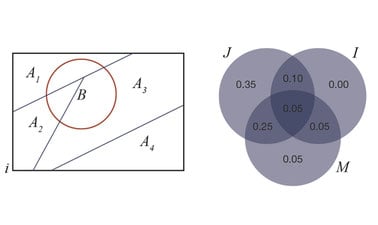
Probability and Statistics I: A Gentle Introduction to Probability
<p>This course provides an introduction to basic probability concepts. Our emphasis is on applications in science and engineering, with the goal of enhancing modeling and analysis skills for a variety of real-world problems.</p>
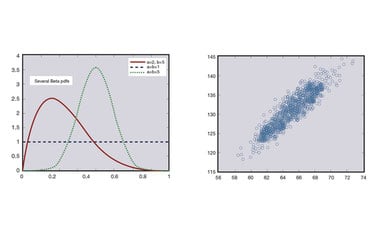
Probability and Statistics II: Random Variables – Great Expectations to Bell Curves
<p>This course discusses properties and applications of random variables. For instance, how many customers are likely to arrive in the next hour? What’s the probability that a lightbulb will last more than a year?</p> <p>When you’re done with this course, you’ll have enough firepower to undertake a wide variety of modeling and analysis problems; and you’ll be well-prepared for the upcoming Statistics courses.</p>
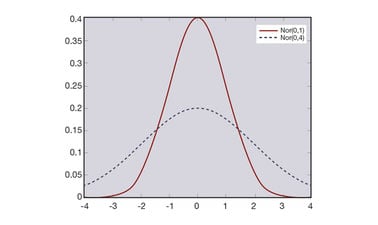
Probability and Statistics III: A Gentle Introduction to Statistics
<p>This course provides an introduction to basic statistical concepts. We begin by walking through a library of probability distributions – including the normal distribution, which in turn leads to the Central Limit Theorem. We then discuss elementary descriptive statistics and estimation methods.</p>
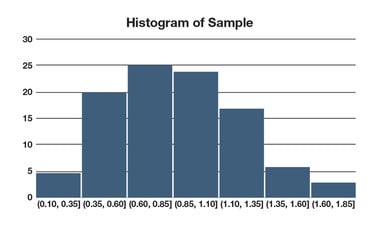
Probability and Statistics IV: Confidence Intervals and Hypothesis Tests
<p>This course covers two important methodologies in statistics – <em>confidence intervals</em> and <em>hypothesis testing</em>. Confidence intervals allow us to make probabilistic statements such as: “We are 95% sure that Candidate Smith’s popularity is 52% +/- 3%.” Hypothesis testing allows us to pose hypotheses and test their validity in a statistically rigorous way. For instance, “Does a new drug result in a higher cure rate than the old drug?"</p>

Linear Algebra I: Linear Equations
<p>This course takes you through the first three weeks of MATH 1554, Linear Algebra, as taught in the School of Mathematics at The Georgia Institute of Technology.</p>

Linear Algebra II: Matrix Algebra
<p>This course takes you through roughly three weeks of MATH 1554, Linear Algebra, as taught in the School of Mathematics at The Georgia Institute of Technology.</p>

Linear Algebra III: Determinants and Eigenvalues
<p>This course takes you through roughly three weeks of MATH 1554, Linear Algebra, as taught in the School of Mathematics at The Georgia Institute of Technology.</p>

Linear Algebra IV: Orthogonality & Symmetric Matrices and the SVD
<p>This course takes you through roughly five weeks of MATH 1554, Linear Algebra, as taught in the School of Mathematics at The Georgia Institute of Technology.</p>